Launch offer ends in 23:59:59

The Easiest Way to Prepare for Your SAMSA Day Skipper Exam (Category C and B, South Africa) With Every Rule Drawn Step by Step!

For power boats under 9 metres. Charts, buoyage, compass and courses, the collision regulations, seamanship, weather and tides, emergencies, engines and the law: in your notes it's a wall of text. Here each topic fits on one page, with the drawing and what you need to remember. 82 drawn pages.

I WANT THE DRAWN VERSION

🔒 Secure checkout · PDF by email · 30-day guarantee

One topic per pagethe drawing shows you the rule and the text backs it up
82 drawn pages9 parts, from the skipper's ticket to the exam-day checklist
Up-to-date sourcesSAMSA Small Vessel Code, the 2007 Small Vessel Safety Regulations and COLREG

This Is What the Pages You Will Study Look Like

One topic per page, the drawing that shows you how it's done and the boxes with what you need to know:

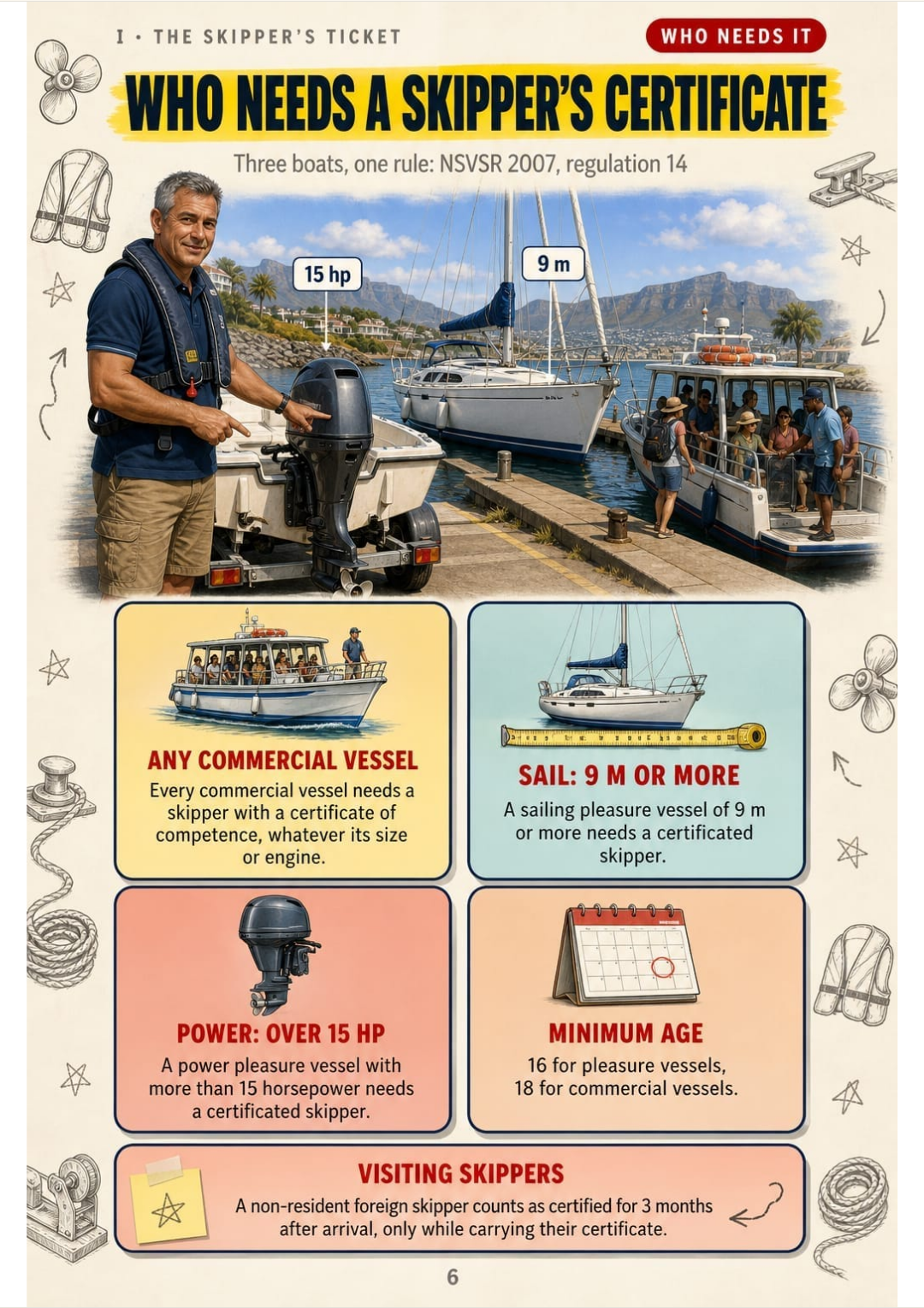
Commercial, sail 9 m+, power over 15 hp: minimum age 16 for pleasure, 18 for commercial
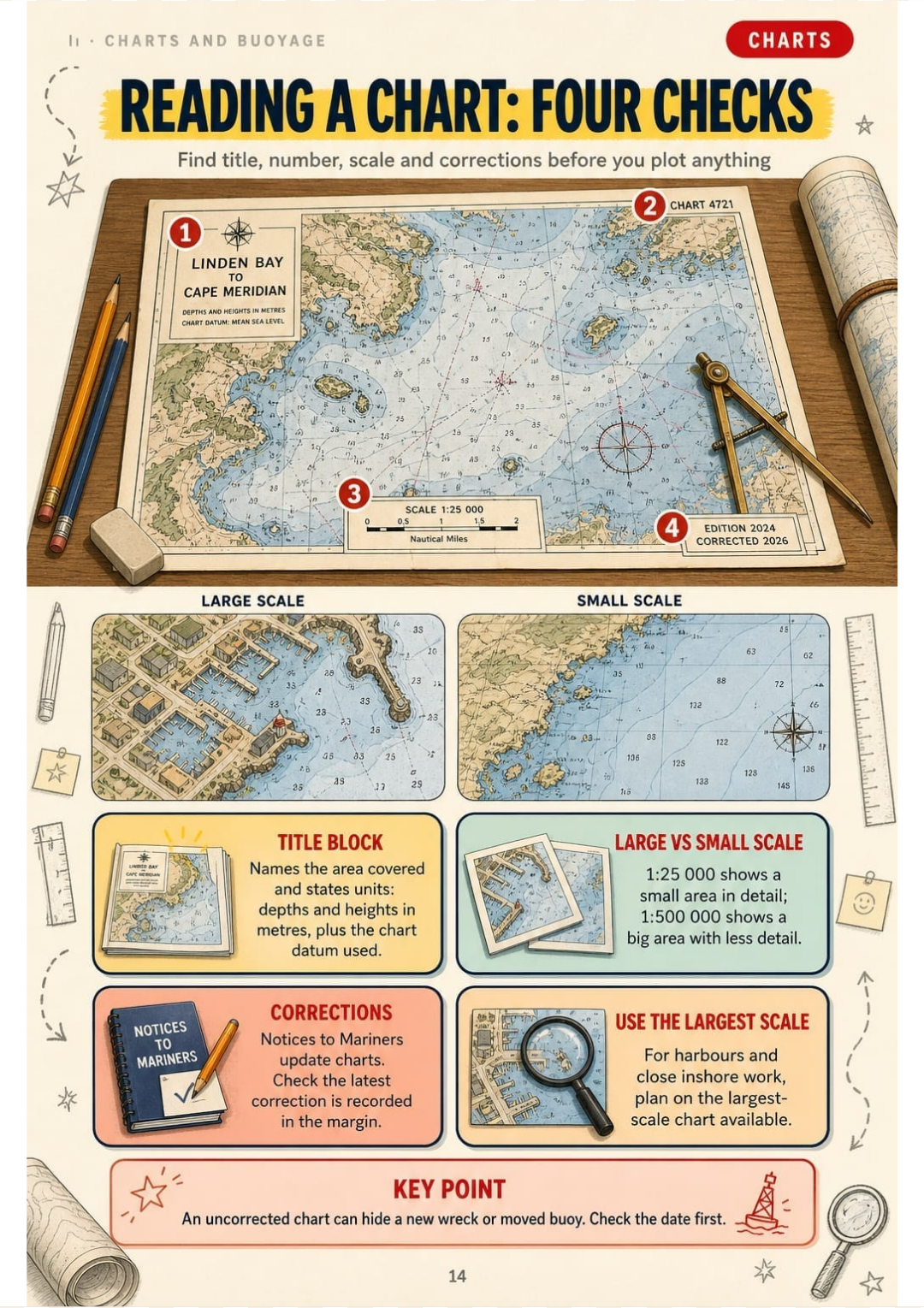
Title, number, scale, correction: the four checks before plotting
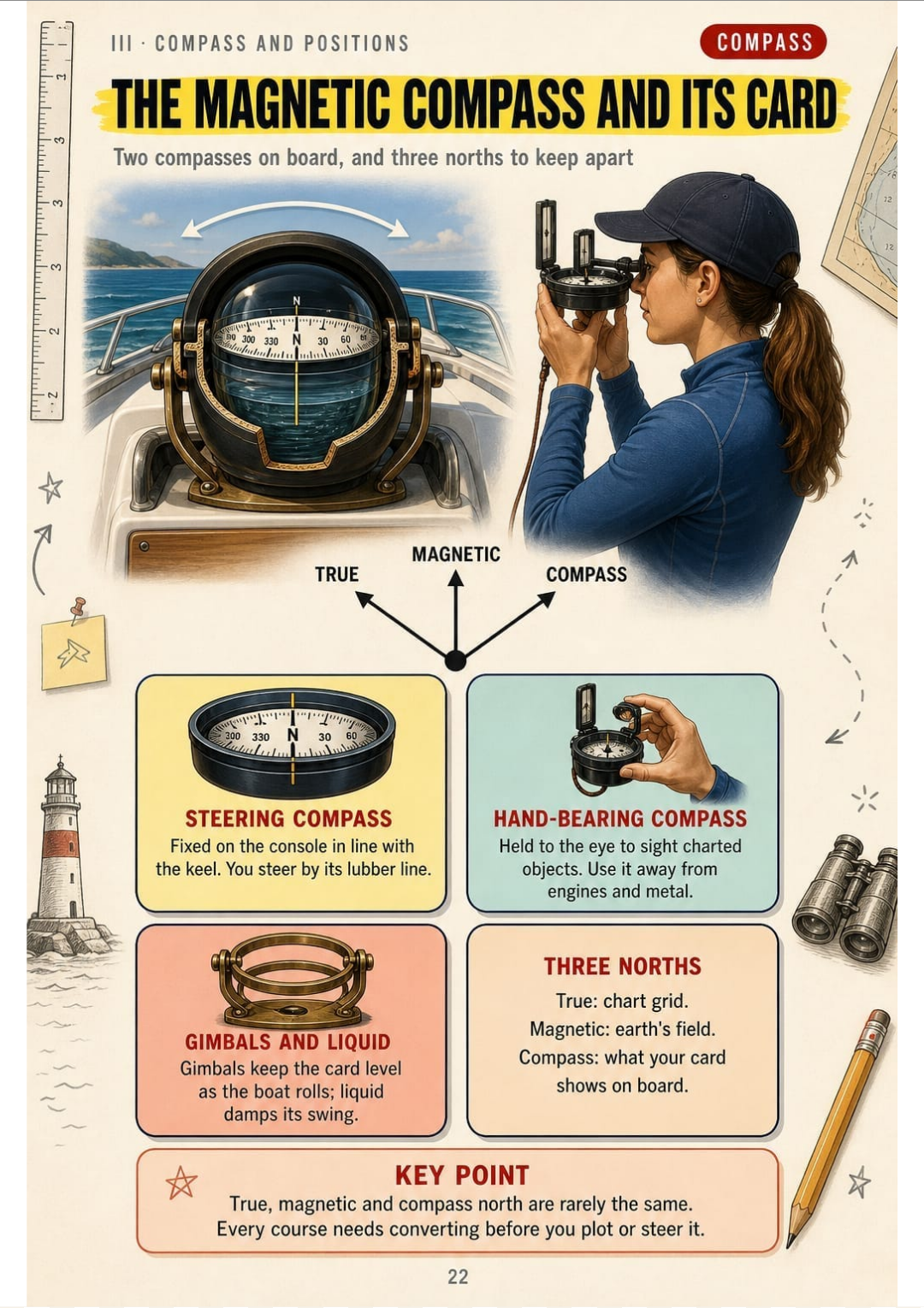
Steering compass vs hand-bearing compass, plus true, magnetic and compass north
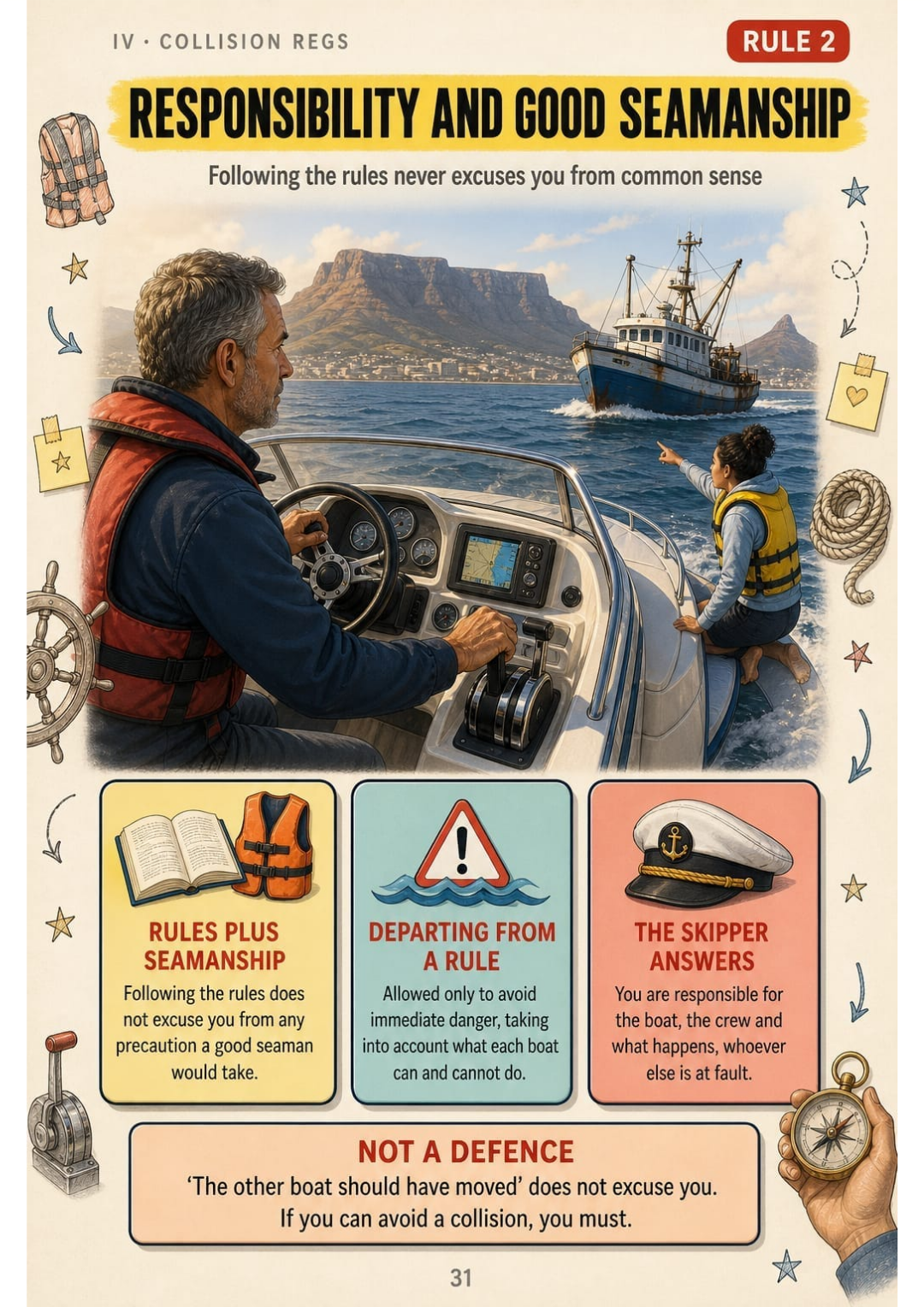
Rule 2: you may depart from a rule only to avoid immediate danger.
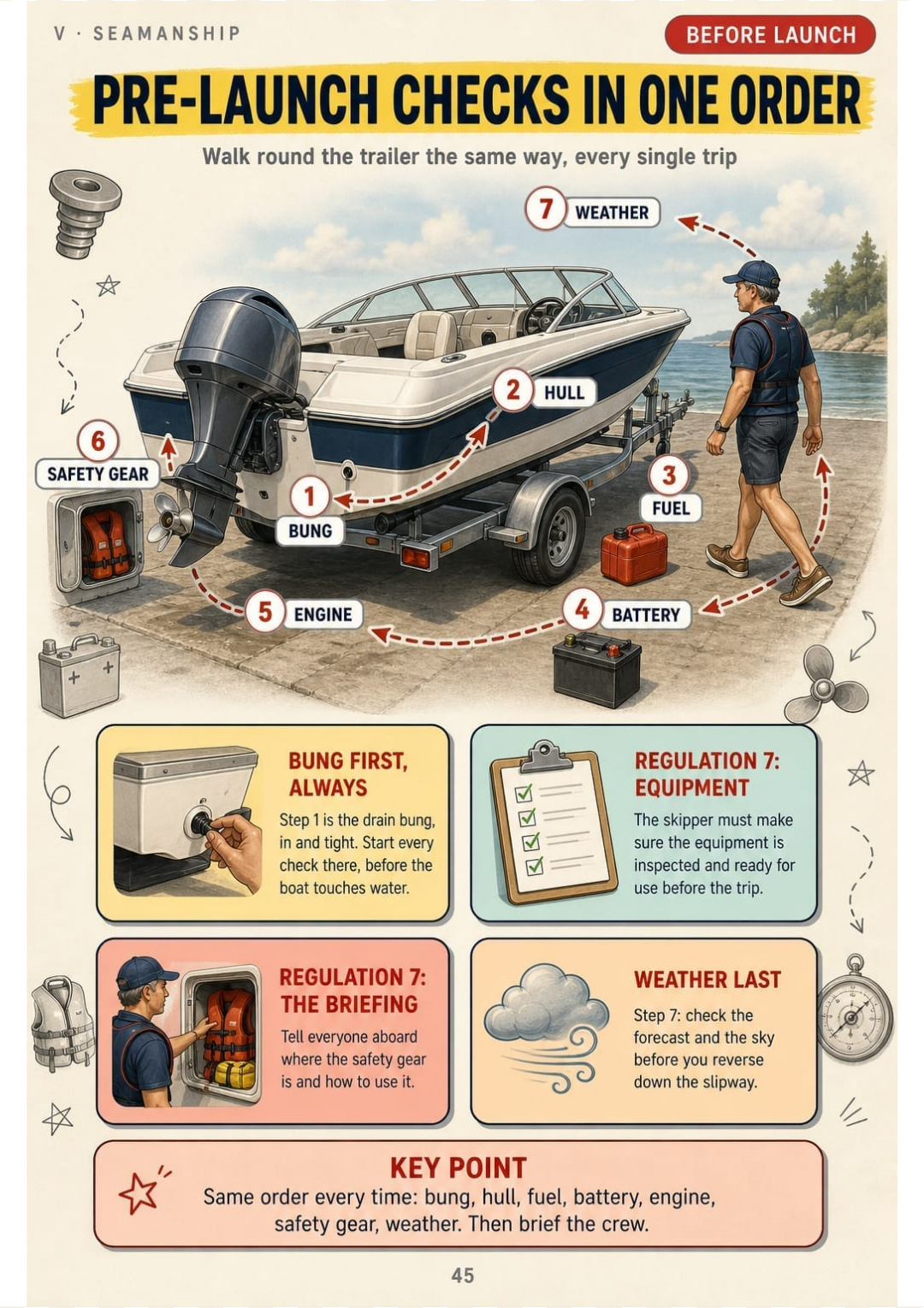
Bung, hull, fuel, battery, engine, safety gear, weather: the pre-launch circuit, plus the crew briefing (reg 7).
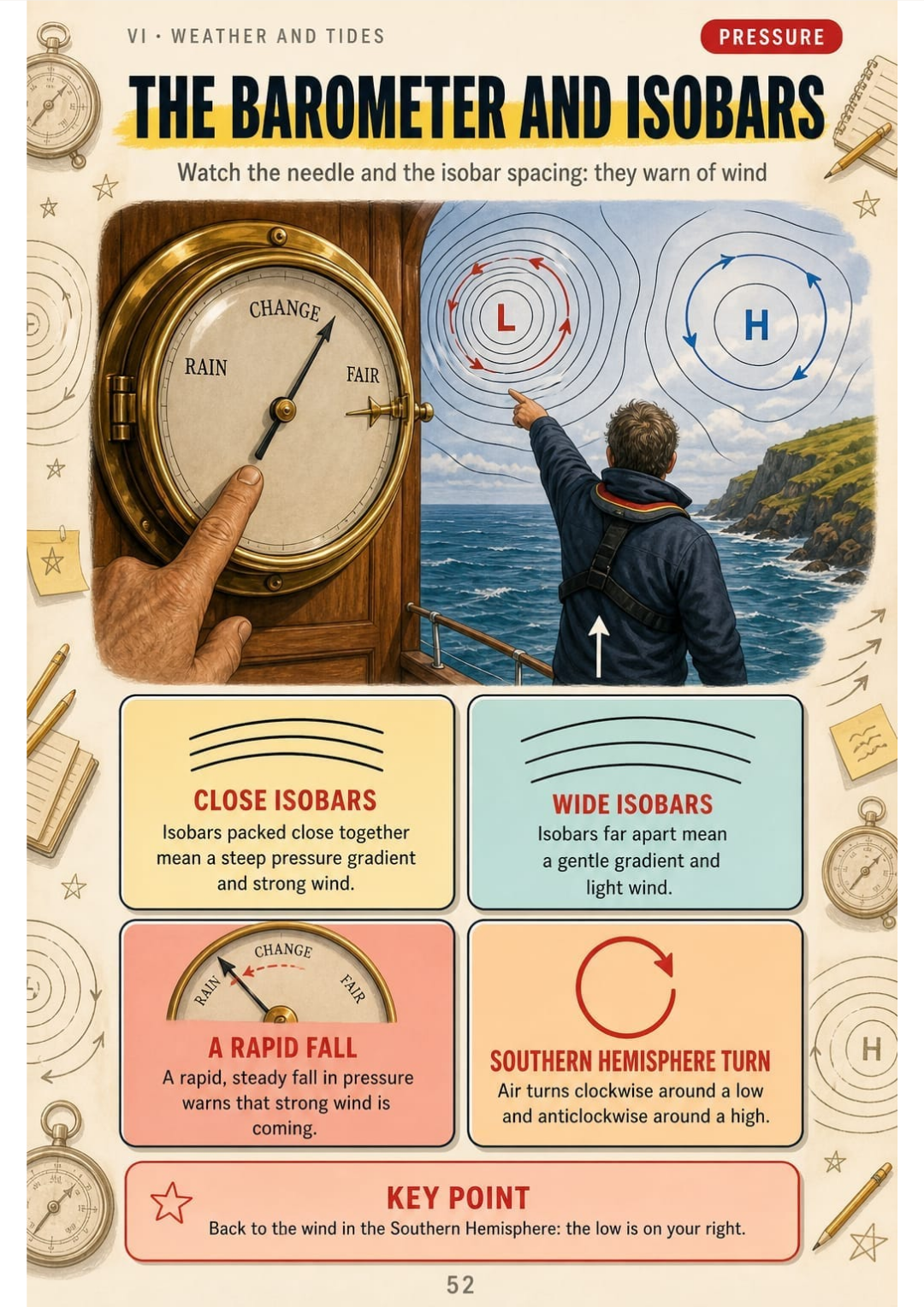
Close isobars mean strong wind; back to the wind, the low is on your left
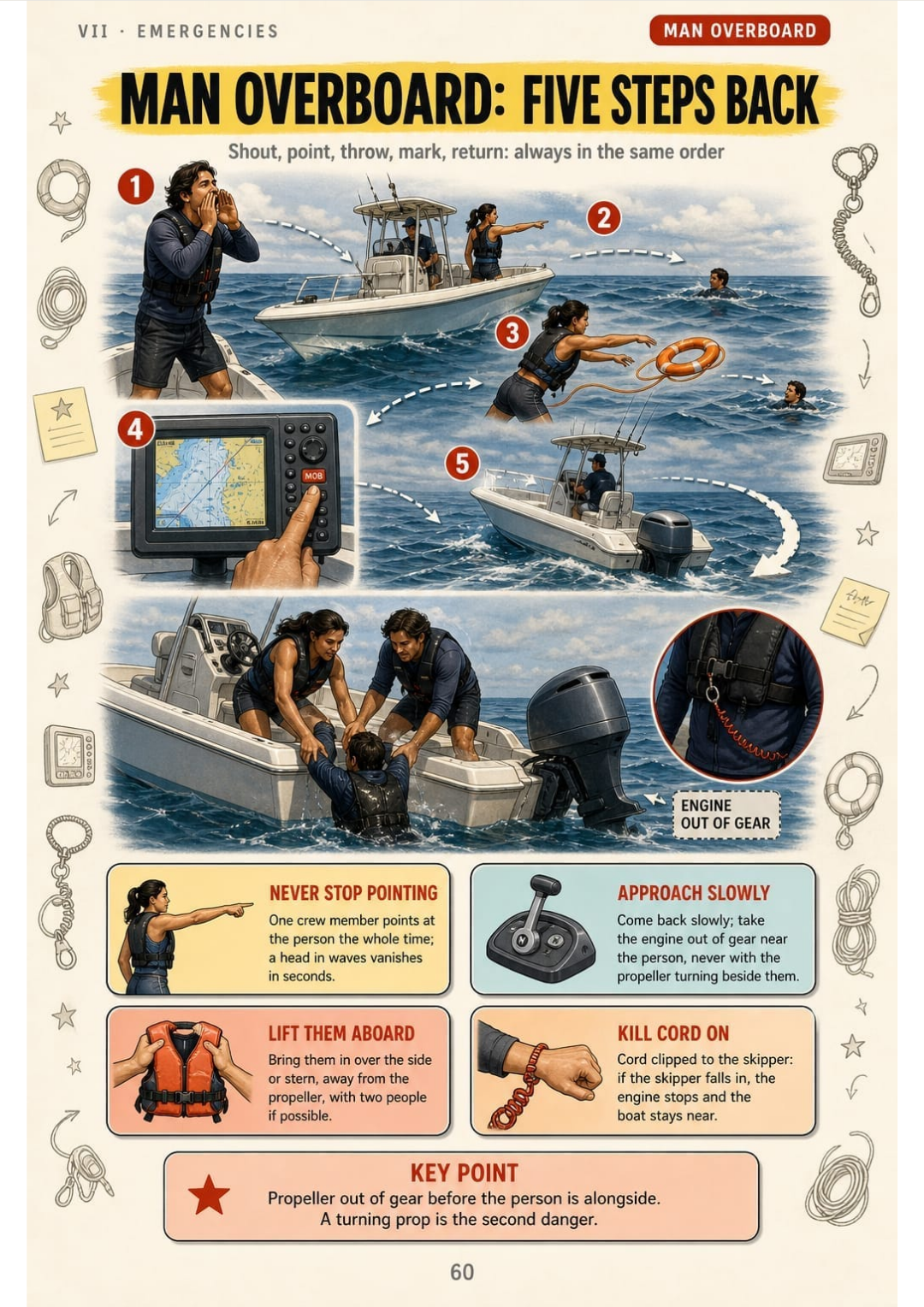
Man overboard in 5 steps, with the engine out of gear near the person
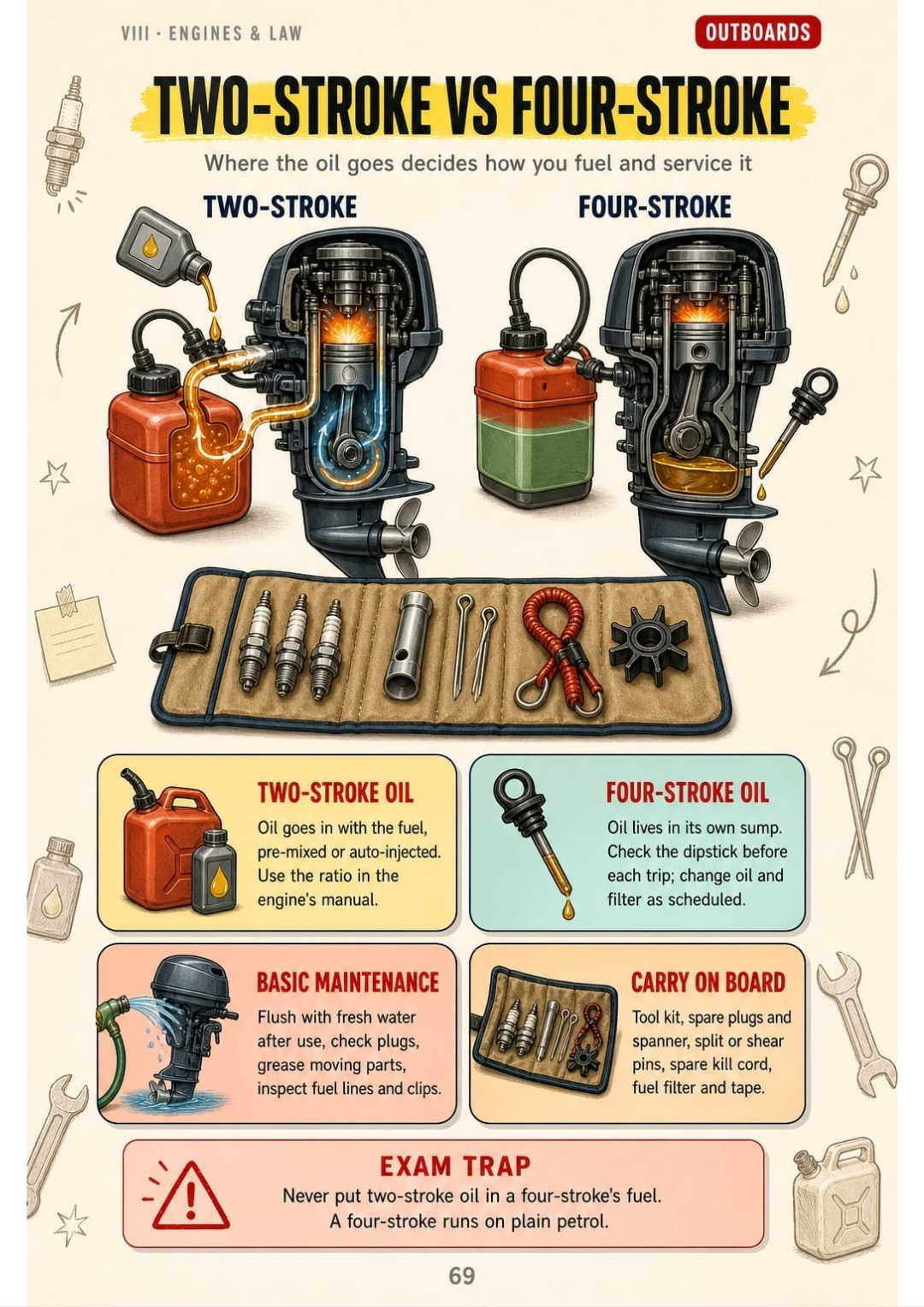
Two-stroke: oil in the fuel. Four-stroke: oil in its own sump, plain petrol in the tank.

Swipe to see more →

These are real pages from the book. The table of contents is the full one: 9 parts and 77 topics.

It's Not That You Have a Bad Memory. It's That Nobody Put It in Order.

You've read the section on true, magnetic and compass north three times. You close the manual...

...and you can't remember which north your steering compass actually shows. It was just lines of text, one after another.

Steering compass vs hand-bearing compass, plus true, magnetic and compass north

Here the compass is one page: the steering compass and the hand-bearing compass drawn side by side, and true, magnetic and compass north as three arrows on the same card.

And on the pages next to it each topic has its own: variation, deviation, plotting a course, taking a bearing and fixing your position.

First you understand why it works that way. Then the order comes back on its own.

SEE THE DIFFERENCE

Stop memorising rules you can't picture:

THIS
  • Pages and pages of cramped text
  • Chartwork rules without a single drawing
  • In the exam, you don't know where to start
FOR THIS
  • Every rule drawn
  • One topic per page, with the rules in boxes
  • You remember it because you've seen it
Title, number, scale, correction: the four checks before plotting
CONTENTS

Take a Look at the 9 Parts and 77 Topics

The skipper's ticket, charts and buoyage, compass and courses, the collision regulations, seamanship, weather and tides, emergencies and first aid, engines, the boat and the law, and revision with the common traps: 82 pages, all drawn

IThe Skipper's Ticket and This Book · pp. 6-13
  1. Who Needs a Certificate: Over 15 hp
  2. Categories A to E and R at a Glance
  3. Day Skipper C or B: Same Syllabus
  4. Three Routes to Your Sea Time
  5. Written, Oral and Practical: The Three Parts
  6. The 40/40/20 Paper and Its Pass Marks
  7. Interim Certificate and Pretoria
  8. How to Use This Book
IICharts and Buoyage · pp. 14-21
  1. Reading a Chart: Title, Scale and Date
  2. Latitude, Longitude and the Nautical Mile
  3. Chart Symbols for Rocks, Wrecks and Shoals
  4. Soundings, Contours and the Seabed
  5. Lights and Their Characteristics
  6. IALA Region A: Port and Starboard Marks
  7. Cardinal Marks: Where the Safe Water Is
  8. Isolated Danger, Safe Water, Special Marks
IIICompass, Courses and Positions · pp. 22-30
  1. The Magnetic Compass and Its Card
  2. Variation: True to Magnetic
  3. Deviation and Checking It by Transits
  4. Plotting a Course With Parallel Rulers
  5. Taking and Correcting a Bearing
  6. Fixing by Cross Bearings and Transits
  7. DR, EP, Wind, Current and ETA
  8. GPS Waypoints, Routes and Limitations
  9. Leading Lights Into Harbour
IVCollision Regulations · pp. 31-44
  1. Responsibility and Good Seamanship
  2. Lookout and Safe Speed
  3. Risk of Collision: The Steady Bearing
  4. Action to Avoid Collision
  5. Narrow Channels and Traffic Schemes
  6. Overtaking: 22.5° Abaft the Beam
  7. Head-on: Both Turn to Starboard
  8. Crossing: Give Way to Starboard
  9. Stand-on Vessel: When You May Act
  10. Who Keeps Clear of Whom
  11. Restricted Visibility
  12. Lights on a Power Boat Under 12 m
  13. Sound Signals: One, Two, Three, Five
  14. Distress Signals in Annex IV
VSeamanship · pp. 45-51
  1. Pre-launch Checks Before Every Trip
  2. Leaving Voyage Details Ashore
  3. Safety Gear, Capsize Rope and Drogue
  4. Parts of a Boat and Nautical Terms
  5. Four Knots: Reef, Sheet Bend, Clove, Bowline
  6. Rope Care and When to Condemn It
  7. Fuel Planning and the 25% Reserve
VIWeather and Tides · pp. 52-59
  1. The Barometer and Pressure Gradient
  2. The Beaufort Scale and Sea State
  3. Fog, Mist, Haze and Visibility
  4. Getting Forecasts and Storm Warnings
  5. Berg Winds, Busters and the South-Easter
  6. Land and Sea Breezes, Swell
  7. Fronts and South African Weather Systems
  8. Spring and Neap Tides
VIIEmergencies and First Aid · pp. 60-68
  1. Man Overboard Recovery
  2. Collision, Grounding and a Serious Leak
  3. Fire on Board
  4. Abandoning and Emergency Beaching
  5. Jury Steering and Towing a Disabled Boat
  6. Calling for Help: Mayday and Distress
  7. CPR and Near-Drowning
  8. Bleeding, Shock and Hypothermia
  9. Sunburn, Hooks, Stings and Bites
VIIIEngines, Boat and the Law · pp. 69-76
  1. Two-stroke and Four-stroke Outboards
  2. Fuel, Cooling Water and the Impeller
  3. Trim, Tilt and the Propeller
  4. Engine Fault Finding at Sea
  5. Stability: G, B and Metacentric Height
  6. Stiff, Tender, Freeboard and Buoyancy
  7. Your Legal Duties as Skipper
  8. Alcohol Limits and Fitness to Skipper
IXRevision and Common Traps · pp. 77-82
  1. Variation vs Deviation: Signs Mixed Up
  2. Using the Longitude Scale for Distance
  3. Overtaking or Crossing? Deciding
  4. Mixing Up Cardinal Marks
  5. Day-only Limits of Category C and B
  6. Final Checklist for Exam Day

What If Every Topic Fit on a Single Page?

Imagine this:

Instead of rereading half a page on the collision regulations without being able to picture who gives way...

...you open the page and find crossing, head-on and overtaking drawn from above, with the give-way boat in one colour and the stand-on boat in another.

Bung, hull, fuel, battery, engine, safety gear, weather: the pre-launch circuit, plus the crew briefing (reg 7).

And cardinal marks, variation, the barometer, man overboard and the 25% fuel reserve become drawings and tables you can read at a glance.

You stop repeating and start understanding.

That's exactly what South African Skipper, Illustrated does. It isn't “just another manual”. It's 9 parts and 77 drawn topics, and at the end a revision part with the most frequent mix-ups and an exam-day checklist. Because what your brain sees in order, it remembers.

Because what your brain sees organized, it remembers.

Here Is What You Get with South African Skipper, Illustrated:

Ipp. 6-13

The Skipper's Ticket and This Book

Who needs a certificate, categories A to E and R, Day Skipper C or B, sea time, the written, oral and practical, the pass marks and the interim certificate.

IIpp. 14-21

Charts and Buoyage

Reading a chart, latitude, longitude and the nautical mile, symbols, soundings, light characteristics and IALA Region A marks, cardinals included.

IIIpp. 22-30

Compass, Courses and Positions

The compass, variation and deviation, plotting a course, bearings, fixes, DR, EP and ETA, GPS limitations and leading lights.

IVpp. 31-44

Collision Regulations

Lookout, safe speed, risk of collision, overtaking, head-on, crossing, the stand-on vessel, lights, sound signals and distress signals.

Vpp. 45-51

Seamanship

Pre-launch checks, voyage details ashore, safety gear, parts of a boat, four knots, rope care and fuel with the 25% reserve.

VIpp. 52-59

Weather and Tides

The barometer, the Beaufort scale, fog, forecasts and warnings, berg winds and the south-easter, sea breezes, fronts, springs and neaps.

VIIpp. 60-68

Emergencies and First Aid

Man overboard, collision, grounding and leaks, fire, abandoning, towing, Mayday, and the basic first aid the syllabus asks for.

VIIIpp. 69-76

Engines, Boat and the Law

Two-stroke and four-stroke outboards, cooling and the impeller, trim, fault finding, stability, your legal duties and alcohol limits.

IXpp. 77-82

Revision and Common Traps

The most frequent mix-ups side by side, the day-only limits of C and B, and a final checklist for exam day.

At the end of the book: A revision part with the most frequent mix-ups and an exam-day checklist.

And That Is Not All: 2 More Books, Free

The Skipper's Rules of the Road Card

BONUS 1: «The Skipper's Rules of the Road Card»

Value on its own: US$ 17.90

Who gives way, light sectors, the lights of a power boat under 12 m, sound signals, IALA Region A marks and distress signals on one printable card, with a close-up of each panel and a pocket copy for the boat.

250 Skipper Terms on Cards

BONUS 2: «250 Skipper Terms on Cards»

Value on its own: US$ 14.90

Every term from the nine parts on its own card with a one-line definition, so you can test yourself in spare minutes and arrive at the oral knowing the words the examiner uses.

South African Skipper, Illustrated + 2 Free Books

  • South African Skipper, Illustrated: 82 drawn pagesUS$ 63
  • BONUS 1: The Skipper's Rules of the Road CardUS$ 17.90
  • BONUS 2: 250 Skipper Terms on CardsUS$ 14.90
  • High-resolution PDF to printIncluded
Total value US$ 95.80
YOUR PRICE:
US$ 27
You save US$ 68.80
YES, I WANT THE SOUTH AFRICAN SKIPPER SKETCHBOOK FOR US$ 27

📄 This is a digital PDF book sent to your email: nothing is printed or shipped.

Secure purchaseEncrypted payment30-day guarantee

PDF by email: South African Skipper, Illustrated reaches your inbox as a PDF, and the two free books come by email too. One-time payment, no installments or hidden costs.

Is This Book for You?

You're doing your skipper's course

You're doing your skipper's course

Charts, buoyage, the collision rules and weather, one topic per page, to revise between lessons and your time on the water.

Your exam date is booked

Your exam date is booked

A full run through the syllabus before the written, the oral and the practical, with the most frequent mix-ups side by side at the end.

You already skipper your own boat

You already skipper your own boat

A quick visual refresher on what you do every trip: pre-launch checks, who gives way, the fuel reserve and man overboard.

To Sum Up: Here Is What You Get

US$ 95.80US$ 27
YES, I WANT THE SOUTH AFRICAN SKIPPER SKETCHBOOK FOR US$ 27

📄 This is a digital PDF book sent to your email: nothing is printed or shipped.

30DAYS
GUARANTEE

30-Day Guarantee

30-day guarantee: tell us what didn't work and we'll refund 100%.

You have 30 days to try South African Skipper, Illustrated and the two bonus books. If it doesn't help you revise, tell us what didn't work and we'll refund 100% of what you paid. One-off payment, no subscriptions and no surprises.

Frequently Asked Questions

How do I receive it?

You get an email with South African Skipper, Illustrated as a high-resolution PDF, to read on your phone or print. The two bonus books, The Skipper's Rules of the Road Card and 250 Skipper Terms on Cards, also come by email.

Is it a monthly or a one-off payment?

A one-off payment of the price shown on this page, charged in South African rand if you are in South Africa. If your card is in another currency, your bank converts it and may add its own card fee. No instalments and no subscription.

Who is it for?

For anyone preparing for the SAMSA Day Skipper Category C or B certificate for power boats under 9 metres in South Africa, whether you're new to it or have been going out for years. It follows the South African syllabus, so it isn't a guide to the RYA Day Skipper or Powerboat courses in the UK. Have a look at the contents above to see the topics.

What sources is it based on?

It's written for South Africa, not adapted from a RYA or US book. It's based on the SAMSA Small Vessel Code (Annex 12 of Marine Notice 13 of 2011), the Merchant Shipping (National Small Vessel Safety) Regulations, 2007, and the international COLREG text. That means IALA Region A buoyage, southern-hemisphere weather, berg winds and the south-easter, and SAMSA's categories and limits. Where a figure isn't in those sources, the page tells you to check with your examiner or training institution.

Is it official material?

No. It's an independent study book. It isn't published, approved or endorsed by SAMSA, SA Sailing or any examiner or training institution. It doesn't give you a certificate or count towards your sea time: your certificate comes only from passing the exam with your examiner or training institution.

Does it replace my skipper's course?

No. Your course and your school's manual give you the syllabus. This book gives you the same topics as one drawing per page, always in the same order, to revise between lessons, before the oral and on the boat. The first-aid pages cover what the syllabus asks for and don't replace a first-aid course or medical care.

Are the exam-style questions the real exam questions?

No. Any exam-style questions in our books are written by us for practice. They aren't official questions and they don't come from any real paper.

Can I print it?

Yes. It's a printable PDF: print the whole book or just the pages you need, and keep the Rules of the Road Card in the boat.

What if I don't like it?

30-day guarantee: tell us what didn't work and we'll refund 100%.

One Last Thing Before You Decide...

You don't have to reread the same page hoping it sticks this time.

You don't have to memorise rules you can't picture.

And you certainly don't have to walk into the exam not knowing where to start.

There's a simpler way. And it's one click away. Now it's your turn.

One-time payment: US$ 27 · Guarantee: 30 days · PDF by email

YES, I WANT THE SOUTH AFRICAN SKIPPER SKETCHBOOK FOR US$ 27

📄 This is a digital PDF book sent to your email: nothing is printed or shipped.